

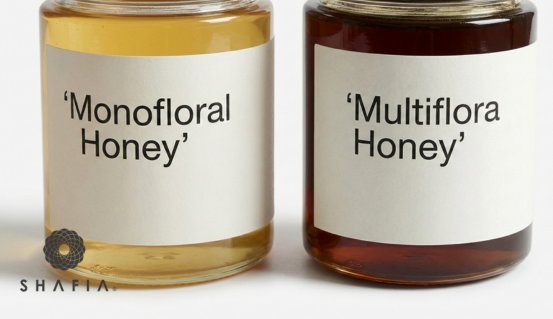
Honey may look simple in a jar, but behind its golden glow lies a fascinating world of flowers, bees, and flavors. If you’ve ever wondered why some honey tastes mild while others are bold, or why certain jars mention a specific flower, you’re already touching the heart of the monofloral vs multiflora honey debate.
Let’s break it down in a clear, detailed, and easy-to-understand way, so you can confidently choose the right honey—whether for daily use, gifting, or premium culinary needs.
What Is Monofloral Honey?
Monofloral honey is honey produced when bees collect nectar mainly from one dominant type of flower. Beekeepers strategically place hives near large plantations or forests of a single flowering source to achieve this.
Key Characteristics of Monofloral Honey
Popular Types of Monofloral Honey
Each type carries the unique essence of its flower, which is why monofloral honey lovers often develop favorites.
What Is Multiflora Honey?
Multiflora honey (also called wildflower honey) is made when bees gather nectar from multiple types of flowers within an area.
Key Characteristics of Multiflora Honey
This is the most commonly consumed honey worldwide and is perfect for everyday use.
Monofloral vs Multiflora Honey: Side-by-Side Comparison
| Feature | Monofloral Honey | Multiflora Honey |
| Floral Source | One dominant flower | Multiple flowers |
| Flavor Profile | Strong & distinctive | Mild & well-rounded |
| Aroma | Floral-specific | Naturally blended |
| Color | More uniform | Varies seasonally |
| Availability | Limited & seasonal | Widely available |
| Price | Generally higher | More affordable |
Which Honey Is Healthier?
Both are natural and nutritious when raw and unprocessed.
👉 The real health benefit comes from purity, sourcing, and minimal processing, not just floral type.
Taste Matters: Which One Should You Choose?
Choose monofloral honey if you:
Choose multiflora honey if you:
There’s no wrong choice—just the right honey for the right moment.
Why Floral Origin Matters More Than You Think
The flower source affects:
That’s why authentic honey brands always emphasize traceability and origin.
Final Thoughts
The difference between monofloral and multiflora honey isn’t about better or worse—it’s about preference, purpose, and purity.
Think of it this way:
Both are beautiful. Both are natural. Both deserve a place in your kitchen.