

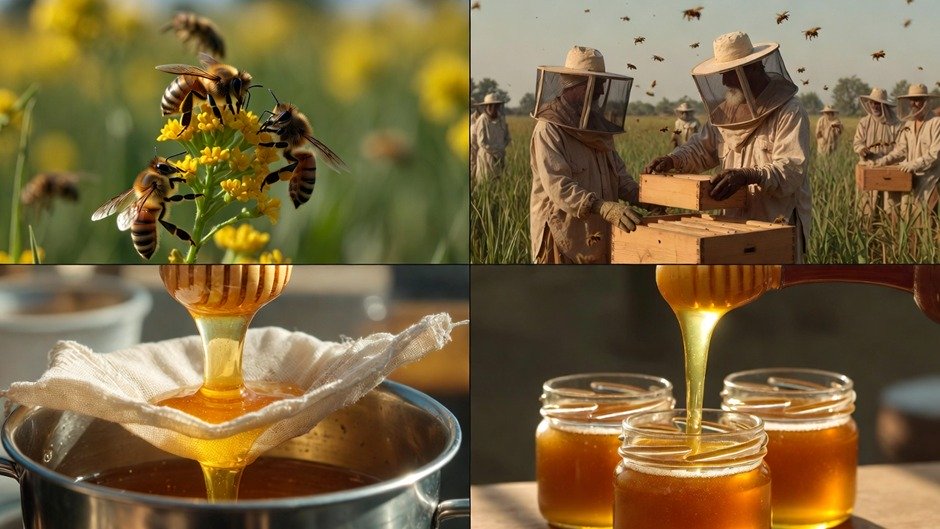
Honey is one of the most natural and pure foods on Earth. But have you ever wondered how honey actually reaches your kitchen shelf? The journey of honey from tiny flowers in nature to the jar on your table is fascinating, detailed, and deeply connected with bees, beekeepers, and careful processing.
In this blog, we take you through the complete journey of honey production — from flower to jar — so you understand how real, natural honey is made and why quality matters.
1. Bees Collect Nectar from Flowers
The journey of honey begins in flowering fields, forests, farms, and wild landscapes. Honeybees fly from flower to flower collecting nectar, a natural sugary liquid produced by plants.
As bees collect nectar, they also help in pollination, which supports crop growth and maintains ecological balance. This is why bees are considered essential for nature and food production.
Each type of flower gives honey a different color, aroma, and taste. For example, mustard flowers produce light golden honey, while forest flowers create darker honey with a stronger flavor.
2. Nectar Turns into Honey Inside the Beehive
Once bees bring nectar back to the beehive, the real transformation begins.
Inside the hive:
The bees then store this honey in honeycomb cells and seal it with natural wax. This process keeps honey safe, pure, and long-lasting.
This natural process is what gives real honey its unique texture, aroma, and nutritional value.
3. Beekeepers Carefully Collect Honey from Beehives
Beekeepers play an important role in harvesting honey safely and responsibly.
At the right season, when honey is mature:
At Shafia, we believe in ethical beekeeping practices, ensuring the safety of bees and sustainable honey harvesting.
4. Natural Filtration Using Cloth (No Heavy Processing)
After honey is collected from the honeycomb, it goes through a simple, natural filtration process.
Instead of heavy industrial machines, the honey is:
This minimal filtration ensures that honey stays close to its natural form, maintaining its original quality and goodness.
5. Filling into Jars & Bulk Buckets
Once filtered, the honey is ready to be packed.
Depending on customer needs:
Every batch is handled with care to maintain:
Proper packaging helps protect honey from moisture and contamination, keeping it safe for long-term use.
6. Quality Checks Before Reaching You
Before honey reaches customers, basic quality checks are done to ensure:
This step ensures that what reaches your home is pure, safe, and natural honey, just as nature intended.
Why Understanding the Journey of Honey Matters
Knowing how honey is produced helps you:
Real honey is not made in factories — it is a gift of nature refined by bees and carefully handled by humans.
Final Thoughts
From flowers in open fields to bees in their hives, from beekeepers’ careful hands to the final jar on your shelf — the journey of honey is natural, beautiful, and meaningful.
At Shafia, we respect every step of this journey and ensure that our honey stays as close to nature as possible. When you choose pure honey, you are not just choosing sweetness — you are choosing nature, purity, and tradition.