

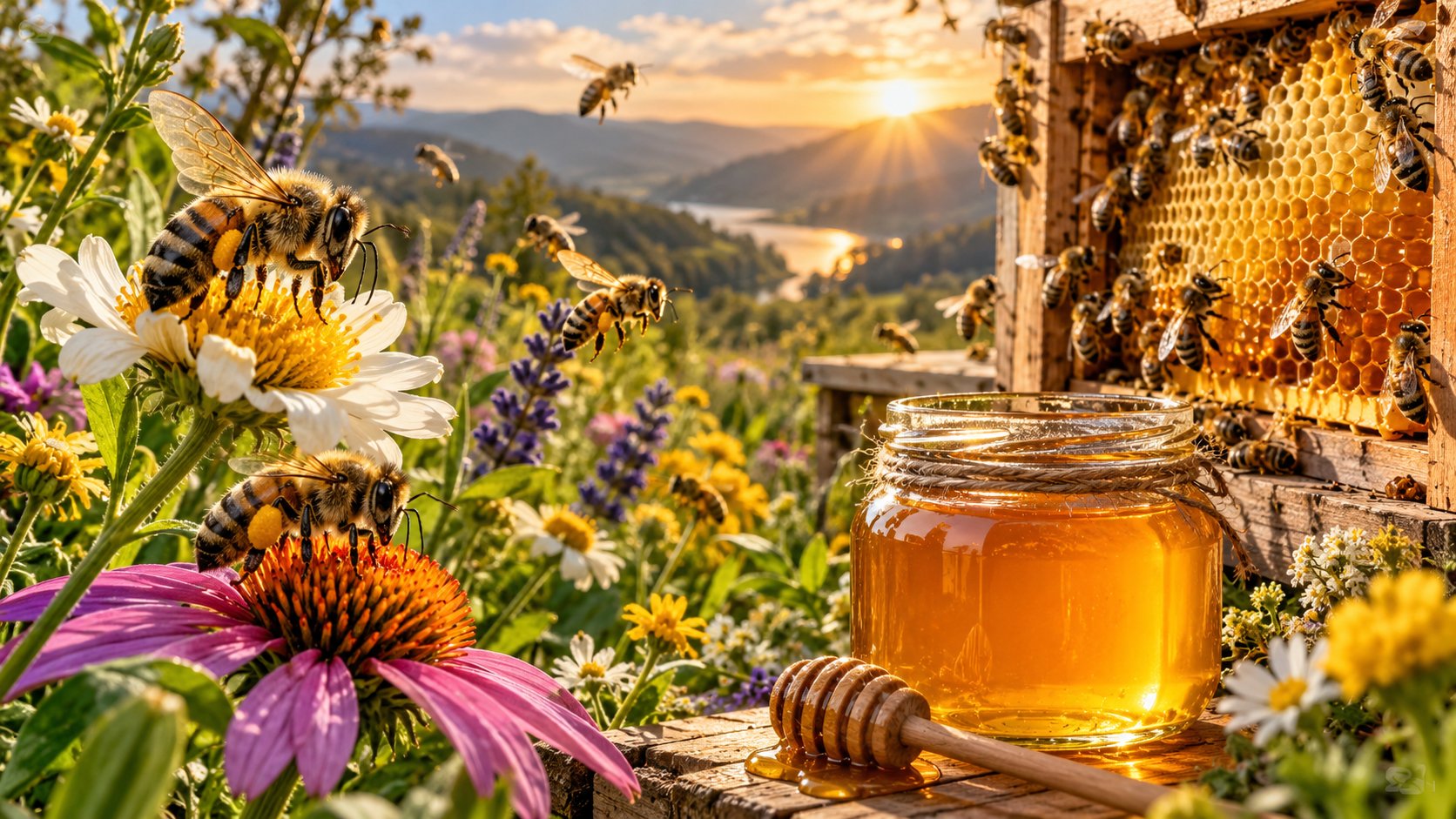
Honey is one of nature’s sweetest and most fascinating foods. But have you ever wondered how bees turn flower nectar into the golden honey we enjoy? The journey from a tiny flower to a jar of honey involves teamwork, nature, and an amazing process inside the beehive.
Let’s take a closer look at how bees make honey—from collecting nectar to storing it in honeycombs.
The honey-making process begins when worker bees leave the hive in search of flowers. They visit different flowers and use their long tongues to collect sweet nectar.
The nectar is stored in a special part of the bee’s body called the honey stomach, which is different from its stomach used for digestion. A single bee may visit hundreds of flowers during its search for nectar.
While collecting nectar, bees also carry pollen from one flower to another. This helps pollinate plants and plays an important role in nature and agriculture.
Once a worker bee returns to the hive, the nectar is passed to other worker bees. The bees use natural enzymes to change the nectar and begin the honey-making process.
The nectar is then placed inside the wax honeycomb. At first, it contains a lot of water, so the bees need to remove the excess moisture.
Bees help evaporate the water by spreading the nectar into thin layers and creating airflow with their wings. As the water content decreases, the nectar becomes thicker and gradually turns into honey.
When the honey is ready, bees seal each honeycomb cell with a thin layer of beeswax. This protects the honey and helps keep it fresh for future use.
Beekeepers carefully collect honey from the hive when the honeycomb contains mature, sealed honey. The wax caps are removed, and the honey is extracted from the comb.
A honey extractor uses spinning motion to remove the honey from the honeycomb without destroying the comb. The honey is then filtered to remove small pieces of wax or other natural particles.
After processing, the honey is filled into clean jars and is ready to be enjoyed.
Responsible beekeepers make sure that bees have enough honey and food available for their own needs, especially during periods when flowers are not plentiful.
The journey from flower to jar is an incredible example of nature’s teamwork. Bees collect nectar, work together inside the hive, remove excess moisture, and carefully store the finished honey in their wax combs.
The next time you enjoy a spoonful of honey, remember that it represents the work of many bees and their remarkable natural process. From a tiny flower to a golden jar, honey truly is a gift from nature.