

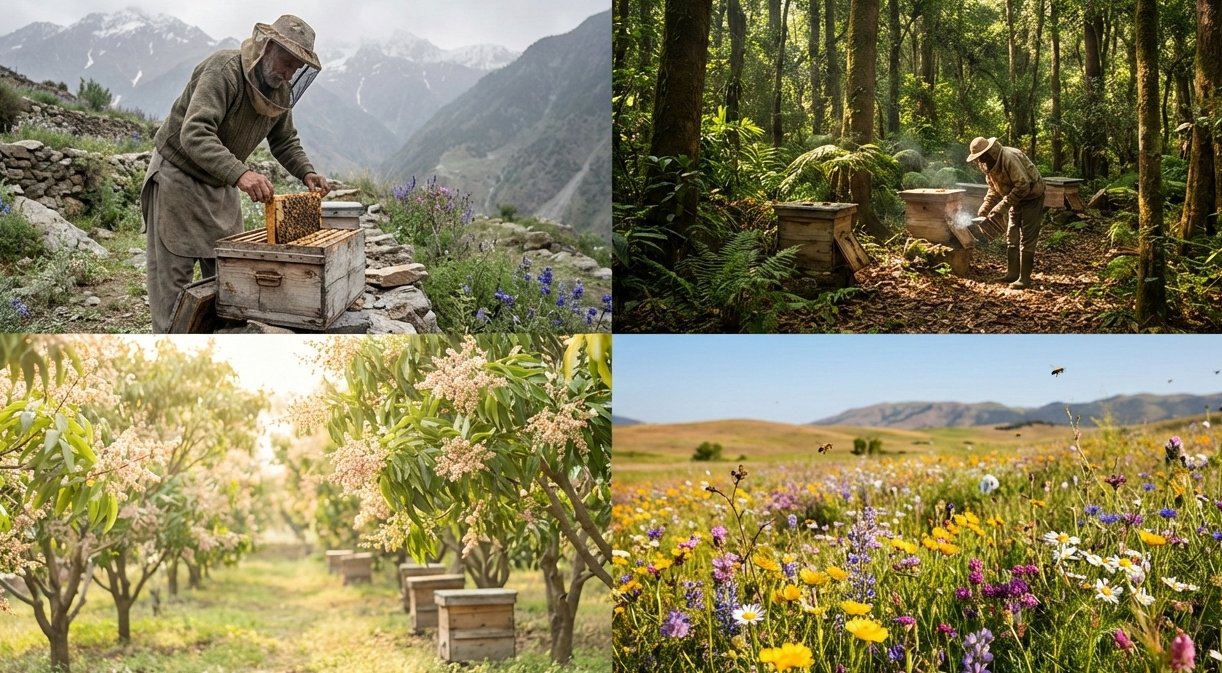
India is one of the world’s largest producers of honey. Thanks to its rich biodiversity, diverse climate, and wide range of flowering plants, India produces many unique honey varieties. The quality, taste, color, aroma, and health benefits of honey depend greatly on when and where it is harvested.
Many people don’t know that honey is collected in different seasons, and each season produces honey with unique characteristics. Seasonal harvesting plays a very important role in ensuring pure, natural, and nutrient-rich honey.
In this blog, we explain honey harvesting seasons in India, why they matter, and how seasonal harvesting helps preserve the true essence of honey.
Why Honey Harvesting Season Is Important
Honey is made from flower nectar. Flowers bloom only during specific seasons, and bees collect nectar naturally when flowers are available.
Because of this:
Harvesting honey at the right time ensures:
That is why seasonal honey is always better than year-round processed honey.
Major Honey Harvesting Seasons in India
India mainly has three major honey harvesting seasons, along with a special Himalayan winter harvest, depending on climate and flowering patterns.
1️⃣ Spring Season (February to April)
Floral Sources
Characteristics of Spring Honey
Why Spring Honey Is Special
Spring honey is considered premium quality honey because flowers bloom abundantly during this time. Bees collect nectar naturally without stress.
Best Uses
2️⃣ Summer Season (May to June)
Floral Sources
Characteristics of Summer Honey
Why Summer Honey Matters
Summer honey comes mainly from forest and wild flowers. It is nutrient-dense and powerful, making it excellent for traditional and health uses.
Best Uses
3️⃣ Monsoon & Post-Monsoon Season (July to October)
Floral Sources
Characteristics of Monsoon Honey
Why This Season Is Important
This honey is collected from remote forest areas and is usually raw and minimally processed. It is highly valued in Ayurveda.
Best Uses
Himalayan & Winter Harvest (October to December)
Floral Sources
Characteristics
Why Himalayan Honey Is Unique
Cold climates slow nectar flow, making honey thicker and more concentrated. This honey is rare, potent, and premium.
Five Premium Honey Varieties Harvested Seasonally at Shafia India 🍯
India’s biodiversity allows the production of many unique honey varieties. At Shafia India, we focus on seasonal harvesting of the following five premium honey types, each collected at the right time to preserve purity, taste, and nutrition.
1️⃣ Himalayan Honey
Harvesting Season:
October to December (Winter)
Source:
Wild Himalayan flowers and medicinal herbs
Characteristics:
Why It Matters:
Harvested in high-altitude regions where flowers bloom naturally. Slow nectar flow makes this honey highly concentrated.
Best For:
Immunity boosting, cough relief, traditional Ayurvedic use
2️⃣ Berry Honey
Harvesting Season:
February to April (Spring)
Source:
Wild berry blossoms and forest shrubs
Characteristics:
Why It Matters:
Berry honey is seasonal and limited. Its gentle sweetness comes only during natural berry flowering.
Best For:
Daily consumption, energy, immunity support
3️⃣ Litchi Honey
Harvesting Season:
March to April (Spring)
Source:
Litchi flower nectar
Characteristics:
Why It Matters:
Litchi honey is harvested only during the short litchi flowering season, making correct timing very important.
Best For:
Children, elderly, tea, warm water drinks
4️⃣ Rosewood Honey
Harvesting Season:
May to June (Early Summer)
Source:
Rosewood tree blossoms in forest regions
Characteristics:
Why It Matters:
Collected from deep forest areas. Seasonal harvesting ensures no sugar feeding and natural nectar collection.
Best For:
Digestion, stamina, overall wellness
5️⃣ Multiflora Honey
Harvesting Season:
July to October (Monsoon & Post-Monsoon)
Source:
Multiple wildflowers and herbs
Characteristics:
Why It Matters:
Multiflora honey reflects the true biodiversity of the region and changes naturally with seasons.
Best For:
Daily use, immunity, general health
How Seasonal Harvesting Affects Honey Quality
| Factor | Seasonal Honey | Year-Round Processed Honey |
| Taste | Natural & floral | Uniform |
| Color | Changes by season | Artificially consistent |
| Nutrients | High | Reduced |
| Purity | Natural | Often blended |
Why Seasonal Honey Is More Trustworthy
This is why raw, seasonal honey crystallizes naturally, which is a clear sign of purity.
How Shafia India Follows Seasonal Honey Harvesting
At Shafia India, we:
Our honey reflects the true season and floral source, just as nature intended.
How to Identify Seasonal Honey as a Consumer
These are clear signs of real, seasonal honey.
Conclusion
Honey harvesting seasons in India play a major role in determining honey quality. Seasonal honey is healthier, tastier, and more natural than factory-processed honey. Choosing honey harvested at the right time supports bees, farmers, biodiversity, and your health.
Always choose seasonal, raw, and responsibly harvested honey for the best benefits.